KAFD Civil Service Development Programme: Developing the Next Generation of Civil Service Leaders

At a glance
Goal:
Strengthen leadership capability among promising Jordanian civil servants to support succession and develop a strong future pipeline of leaders.
Scope:
20 participants from across the Jordanian civil service engaged in three modules focused on leadership, influence and teamwork.
Delivery:
A three-module experiential learning programme combining indoor and outdoor activities, MBTI-based self-awareness, leadership frameworks and applied project work. Two modules in Amman and one at the Royal Military Academy Sandhurst (RMAS).
Outcomes:
Exceptional participant feedback (Net Promoter Score 100; average 4.9 out of 5 satisfaction), stronger leadership capability, enhanced collaboration and readiness to take on senior responsibilities.
Region:
Middle East
Sector:
Government / Civil Service
Scale:
20 participants per cohort; three modules per year; programme running successfully for 10 years.
Programme Type:
Bespoke Leadership Development
The Challenge:
The King Abdullah Fund for Development (KAFD) has a long-standing commitment to developing Jordan’s future civil service leaders. The Civil Service Development Programme (CSDP) forms a central part of this investment and has been delivered successfully with Inspirational Group for more than a decade.
This cycle focused on high-potential civil servants preparing to move into more complex leadership roles. The aim was to deepen their capability, build behavioural flexibility, and strengthen the pipeline of leaders ready to serve in senior public-sector positions.

Our Solution:
The programme took participants through three progressively more challenging leadership modules, combining practical learning, psychological insight and structured activities designed to create long-term behavioural change. Each module included pre-work, guided reflection and post-module action planning to support ongoing application.
To embed the learning beyond the classroom, the cohort was also divided into two teams. Each team designed and delivered a real-world project, drawing on course content and leadership models, with the aim of improving the lives of local communities. These projects ran throughout the duration of the programme, giving participants the chance to apply their learning directly and collaboratively.
Module 1 – Leadership and Followership
Delivered in Amman in May 2025, this module introduced core leadership and followership concepts through a blend of discussion, MBTI self-assessments and experiential activities. Participants explored their strengths, personal leadership tendencies and approaches to managing time, priorities and relationships. A mix of indoor and outdoor tasks encouraged reflection and helped embed practical learning. During this module, teams scoped and formulated their community projects, agreeing aims, defining roles and allocating responsibilities. Inter-modular work: Teams began holding regular check-ins to monitor progress and maintain accountability.
Module 2 – Problem Solving and Influencing
The second module, held in Amman in July 2025, focused on decision-making, influence and navigating organisational dynamics. Participants worked with stakeholder management and change leadership tools, examined intent-based leadership models and learned the RESOLVE decision-making framework. Case studies, coaching techniques and peer feedback strengthened confidence and agility in real-world influencing situations. Throughout the module, teams delivered progress updates and continued developing their community projects, refining roles and adapting their approaches based on learning from the module.
Module 3 – Leadership and Teams
The final module took place at the Royal Military Academy Sandhurst in September 2025. Here, participants explored leadership styles, team effectiveness and the stages of team development. They completed Belbin Team Roles assessments, took part in outdoor leadership challenges and applied team-based leadership behaviours in a high-impact environment. The programme concluded with formal presentations of the team projects to a senior stakeholder. In 2025, this audience included the Ambassador, offering participants a high-profile platform to demonstrate their learning, impact and leadership growth.
Impact:
Across all three modules, the programme delivered a consistent and meaningful impact. Participants highlighted the facilitators’ expertise, the inclusive learning environment and the energy sustained throughout each session. The combination of theory, hands-on activities and reflective space created a learning experience that felt both relevant and immediately applicable.
Key Results:
- Net Promoter Score of 100, placing the programme in the excellent category, with an average satisfaction score of 4.9 out of 5
- All participants agreed that the training would positively influence their future work performance
- Facilitator effectiveness rated between 4.9 and 5.0 out of 5 for knowledge, inclusion and engagement
- Strong motivation among participants to apply their learning in their roles and share insights with colleagues
- Reinforced KAFD’s reputation for delivering high-quality civil service development programmes
What This Means For You:
For public-sector organisations investing in leadership development, the CSDP demonstrates how behaviour-focused, experiential learning creates lasting change.
This approach enables:

Participants to build leadership competence through hands-on, authentic learning
Teams to strengthen collaboration and align around shared objectives
Organisations to maintain a strong pipeline of leaders equipped for complex public-sector responsibilities
you may also like...
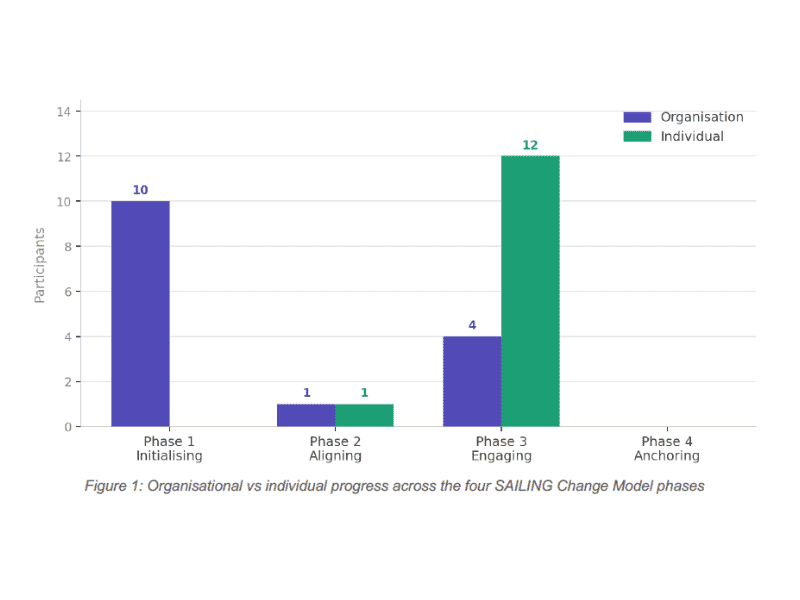
Change Progress Meter: AI Enablement Case Study
How the Change Progress Meter gave senior leaders structured, real-time insight into how a major AI Enablement initiative was being experienced across a global organization.
VIEW CASE STUDY
The Change Leadership Suite in Action: Building Change Leadership Capability Across 16,000 Leaders Worldwide
A global automotive manufacturer needed to build change and transformation capability across 16,000 leaders worldwide. This case study outlines how a structured, maturity-based skill line,...
VIEW CASE STUDY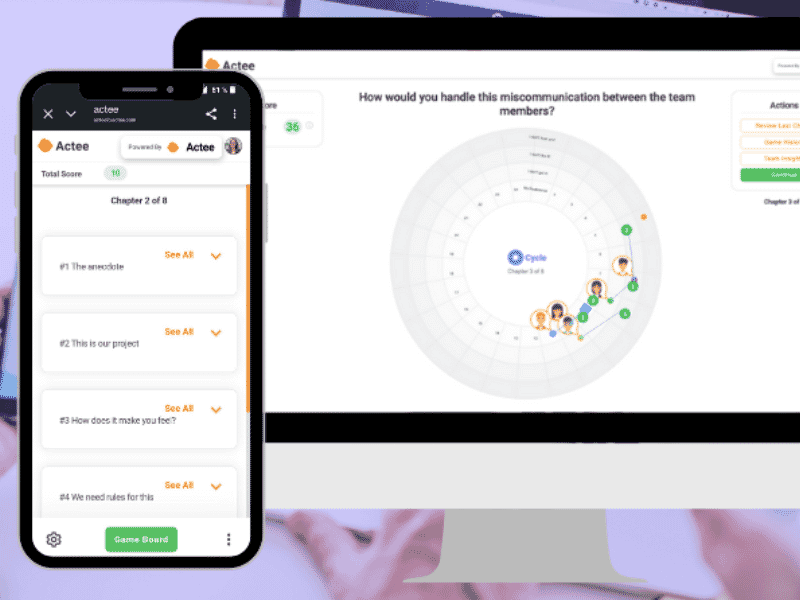
From Passive Learning to Applied Change Leadership in Financial Services
A bespoke virtual programme helping financial services leaders build real change capability through applied, experience-led learning.
VIEW CASE STUDY