How to Be Understood as You Intend to Be

In today’s world of fast-paced change, hybrid work and high expectations, communication isn’t just a nice-to-have. It’s a strategic leadership skill. And yet, so many well-intentioned messages still miss the mark. Misunderstandings stall momentum. Miscommunications damage trust.
As Felicity Wingrove, UK Managing Director of Inspirational Group, explained on the Real Clear Values podcast, great leadership communication isn’t about being eloquent or charismatic. It’s about being understood as you intend to be understood.
Knowing Your Audience: Why Speaking “Your Way” Isn’t Enough
“Speak to people how you would like to be spoken to” might sound like decent advice. But in Felicity’s words, it’s actually pretty terrible.
Why? Because it assumes everyone is like you. And they’re not. From culture and upbringing to emotional wiring and cognitive preferences, we each carry a distinct set of filters. Felicity calls this our “language DNA.”
When we default to our own style, we risk disconnect. We assume understanding instead of ensuring it. And that gap can be costly in performance, morale, even retention.
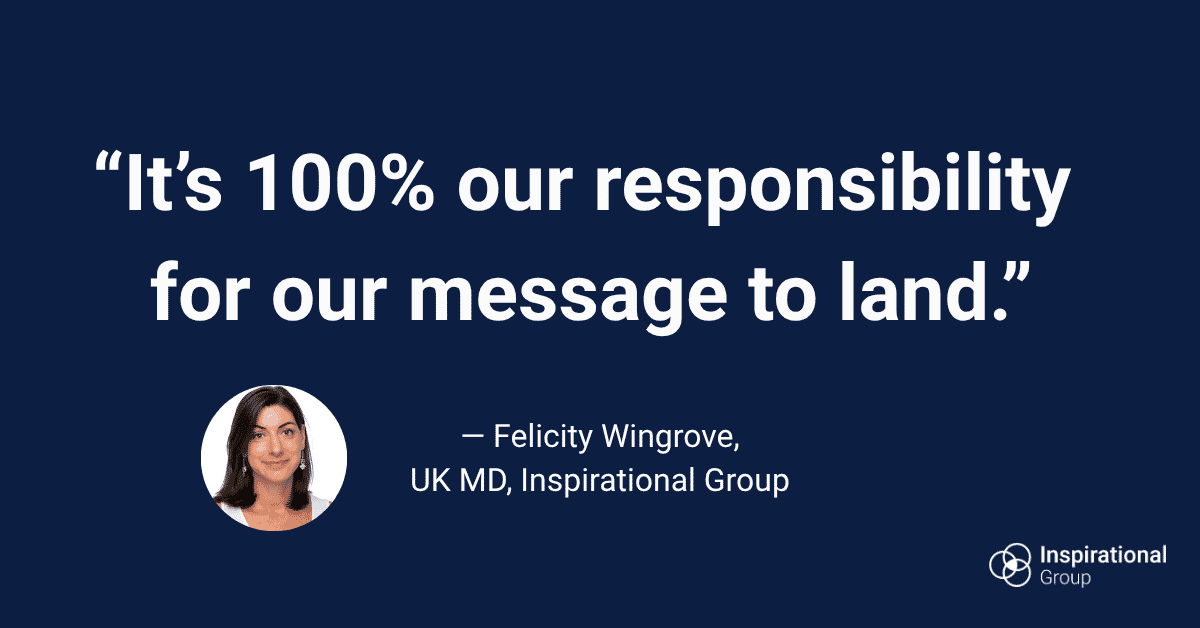
Leadership communication, she argues, is about bridging that gap deliberately. “It’s 100% our responsibility for our message to land.”
The Four Styles of Understanding
One practical way to do that is through Felicity’s model of information preferences:
- Why people want a big-picture purpose first.
- What people need the context and key facts.
- How people crave structure, tools, and steps.
- What-if people question everything and want to probe possibilities.
Rather than picking one, the best communicators cycle through all four. Whether you’re writing a strategy paper or leading a team meeting, structure your message so every style is seen and supported.
Adapting Without Losing Yourself
One of the most powerful myths Felicity challenges is the idea that adjusting your communication style means losing authenticity.
It doesn’t. “You’re not trying to be someone else,” she says. “You’re still you. But just as you’d dress differently for a wedding than a trip to the supermarket, you can show up differently while staying true to your values.”
By flexing tone, energy, detail or pace, you honour the needs of the person in front of you. That’s not performance. It’s leadership.
Communication Is a Commercial Imperative
Felicity is clear: this isn’t soft skills fluff. This is neuroscience, psychology and proven business impact.
When teams feel seen and understood, they move out of fight or flight and into creativity and collaboration. Psychological safety isn’t a bonus. It’s a requirement for innovation.
And when leaders say “take me or leave me”? Increasingly, people will leave.
The cost of poor communication shows up in missed deadlines, strained relationships and wasted time. The upside of great communication is harder to measure, but unmistakable: better outcomes, stronger cultures, and the kind of trust that unlocks performance.
Start with Curiosity
So where do we begin? According to Felicity, it starts with curiosity.
- Get curious about how others prefer to receive information.
- Reflect on your own default style, so you can spot the gaps.
- Move one step closer to where your audience is, whether that’s in tone, structure or pace.
When communication is conscious and connected, we create the conditions for people to thrive. We build trust. We unlock brilliance. And we lead, not just by what we say, but by how we help others hear it.
Want to explore more? Listen to the full conversation with Felicity Wingrove on the Real Clear Values podcast, or follow her for regular tips on communication psychology and leadership impact.
You may also like...

Most leadership development programmes teach people what to think. Leadership simulation exercises put them in conditions where they have to think, decide and act. Under...
VIEW ARTICLE
What does structured leadership development actually return? After 19 years of delivering FUSION, a year-long programme for HSBC, we have a considered answer. Drawn from...
VIEW ARTICLE
AI is rapidly becoming embedded in everyday work. The real challenge for organizations is no longer technology adoption, but how leaders exercise judgement and governance...
VIEW ARTICLE