The Language of Change

Coaching with Precision, Impact and Integrity
On Monday 23rd June, more than 65 leaders, partners, and coaches from across the globe joined us for our latest Coaching Masterclass: The Language of Change: Coaching with Precision, Impact and Integrity.
We were joined by a truly international audience, with participants dialling in from Qatar, Indonesia, Saudi Arabia, India, Germany, the Netherlands, and Cape Town, as well as plenty from the UK and all places in between! The diversity in perspectives and experiences brought incredible depth to the conversation.
And we had a further 50 people register for the recording because time zones (or diaries) didn’t allow them to join us live!
Led by Felicity (Fliss) Wingrove and Lesley Mourant, the session explored one of the most powerful — and often overlooked — tools in coaching and leadership: language.
Not just what we say. But how we say it. Not just the words we choose. But the stories we tell — to ourselves and others — that shape presence, impact and possibility.
Missed the session? Watch the full recording here…
What we explored
This session brought together the psychology of language, advanced coaching technique, and real-world examples to illuminate how language can become a truly impactful tool for transformation.
Clean, Powerful Questions
We unpacked how well-crafted questions — free from assumptions — can open awareness, deepen reflection and challenge limiting beliefs. Fliss and Lesley shared examples that demonstrate how. “how we ask determines what we find.”
Sensory Language Preferences
We looked at the four core sensory processing styles (visual, auditory, kinaesthetic and auditory digital) and how each shapes the way we give, receive and interpret all forms of communication. And how awareness of these styles offers coaches and leaders a powerful lens to flex their language for deeper connection.
Wholeness Scales: Gravitas & Enthusiasm
Fliss introduced the idea of “dialling up or down” qualities like presence and energy to remain authentic, while meeting people where they are. And that’s relevant whether you’re leading a board meeting or coaching a hesitant team member – she shared how finding your range and adapting it is key.
Reframing Our Inner Dialogue
Lesley led a grounding visualisation to surface the internal stories we carry — particularly when we feel misunderstood or frustrated. Shifting these narratives, even subtly, changes how we show up in conversations and in leadership.
Metaphor and Meaning
We explored how the metaphors people use (“breaking glass ceilings,” “washing machine of work,” “grease between the gears”) often hold deeper insight — and how noticing and working with these metaphors can spark powerful dialogue.
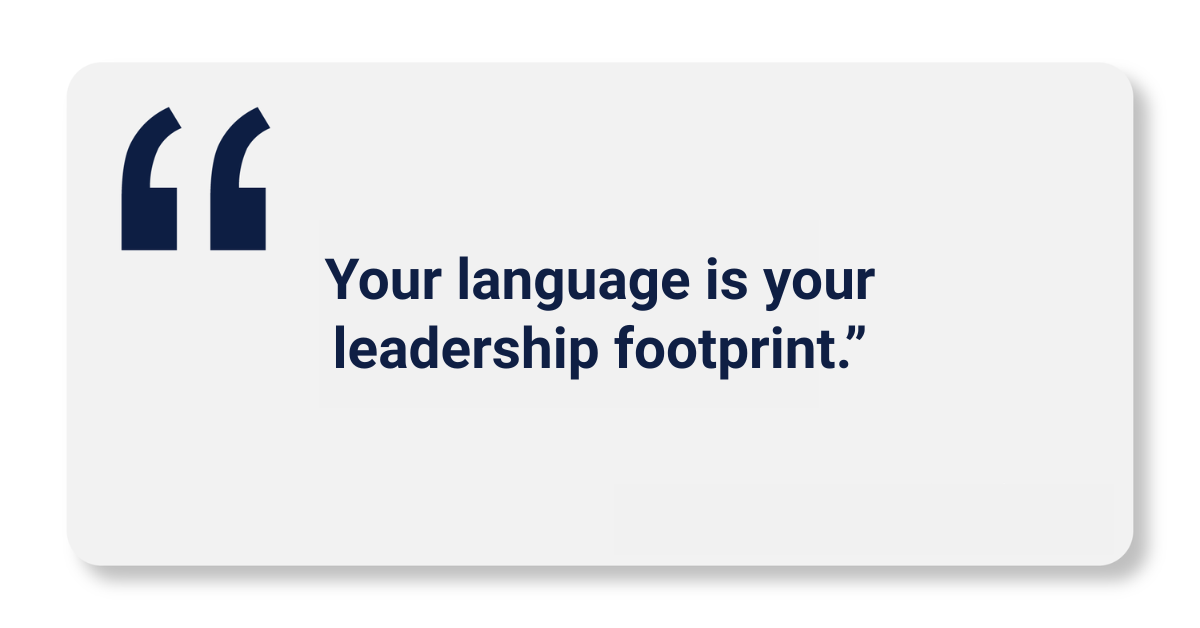
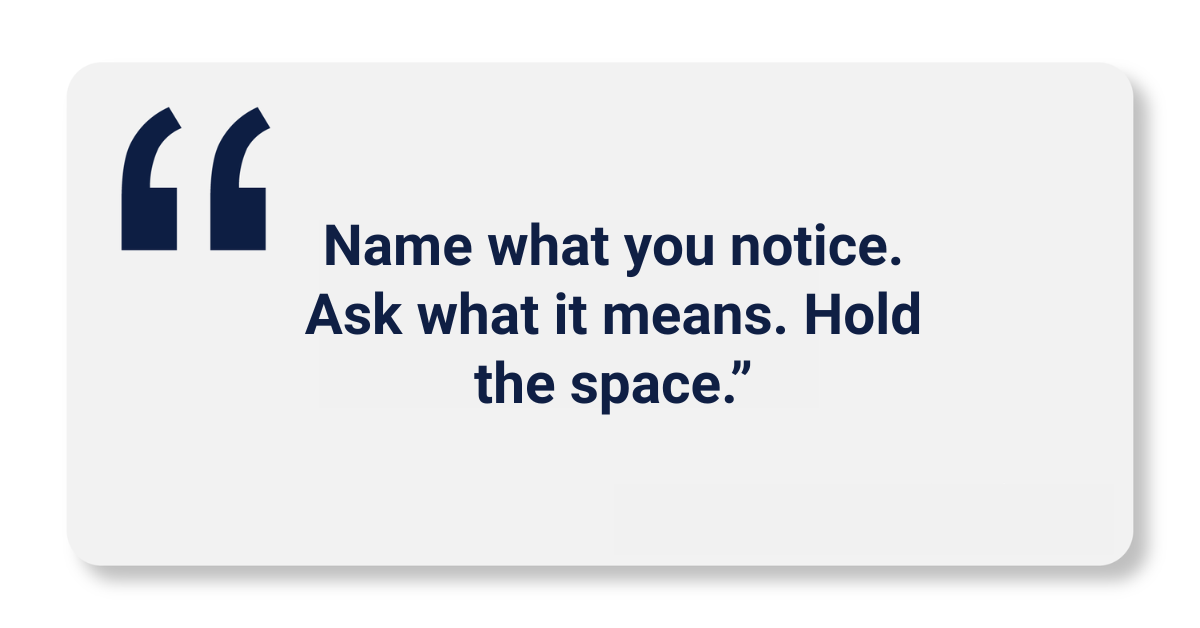
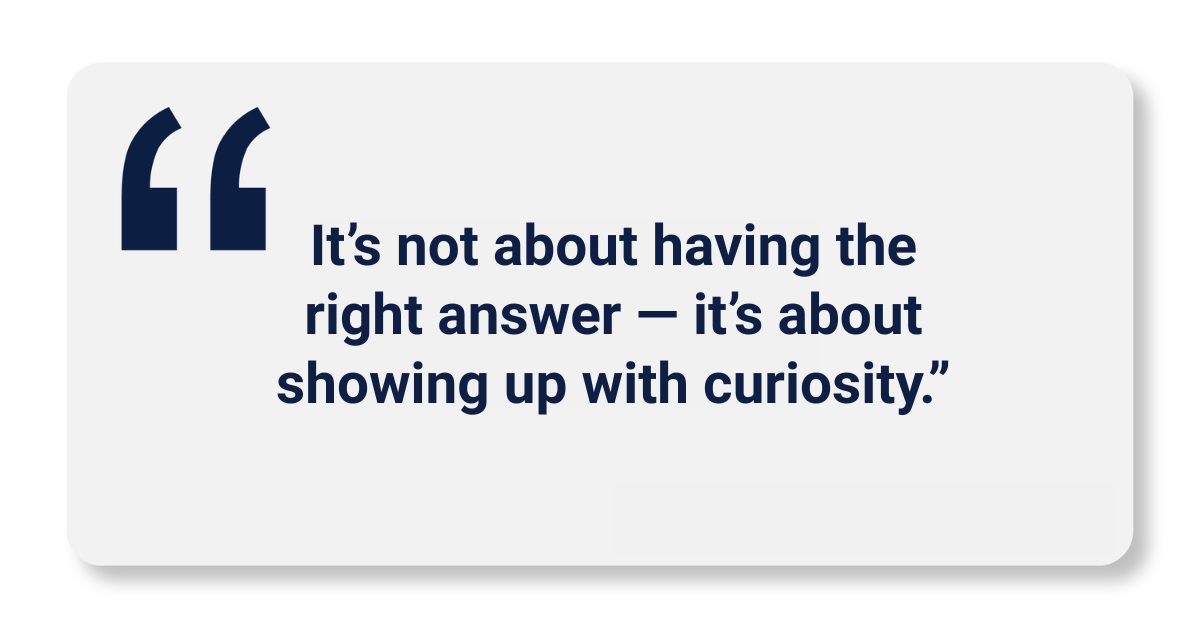
A Few Reflections We Loved
What’s Next?
If you joined us live — thank you. And if you’re catching up via replay, we hope it gives you fresh tools and renewed clarity in how you lead, coach, and communicate.
Watch our previous Coaching Masterclasses
November – Trust & Presence >
March – Self-Awareness >
We’ll continue to offer quarterly coaching masterclasses exploring practical, human-centred themes — from mindset to presence to influence.
📌 Want to stay in the loop? Make sure you’re following us on LinkedIn and signed up to our coaching updates.
Your Questions Answered
Fliss shares her personal responses to some of the brilliant questions that came up during the session.
Gravitas & Presence
“Please explain gravitas once more.” – What exactly is gravitas, and how does it differ from power?
Gravitas is the intangible essence that grounds us in our personal power. It makes those around us feel safe, trust us, and respect us for all the right reasons. I often liken it to our ‘personal power’ — not an overt expression, rather an essence or sense that we can all feel.
“Only – how to do it?” – What are the practical steps to dial up or dial down gravitas?
We touched on some of the ways we can embody and authentically demonstrate emotional resonance. Think of your facial expressions, your wider physiology and body language, your tone and pitch, the volume and timbre of your voice, and of course the words you say. These all need to be aligned, congruent, and authentic.
“Would be nice to understand the art of pausing – where to pause to instil confidence.” – How can leaders use silence effectively?
This is a wonderful topic in its own right, and one we plan to focus on in future sessions. In brief, when a pause is used deliberately (and the audience senses your confidence), it can create a powerful sense of gravitas and give space for deeper engagement. I use advanced pausing — placing it in unexpected moments — to ensure the onus lands exactly where it’s needed.
“Talk a bit about culture in the gravitas space.” – How does cultural background influence perceptions of gravitas?
As we discussed, our ‘window of the world’ is shaped by culture, socialisation, and more. Gravitas resonates differently across cultures. Having worked globally for over two decades, I know — for example — that a soft gravitas lands most effectively in Tokyo, a measured one in Riyadh, and an expanded one in New York. All must be authentic — I simply dial them up or down using the Wholeness Scales approach.
“How to dial up/down gravitas/enthusiasm?” – Can you share techniques to flex these qualities authentically?
Much as I shared above: face, body, voice — and get curious about how far you can dial these qualities up or down while staying true to yourself. Tune into what animation and expression look and feel like for you specifically.
Communication Styles & Language Preferences
“Should we alter our style depending on the audience/person we are talking to?”
Absolutely — always! We should speak to someone how they wish to be spoken to. If in doubt, cycle through the core sensory preferences.
“I suppose the real skill is in trying to work out what type the other person is.”
Yes indeed. We teach this in-depth during our language mastery trainings, using several measures. But it starts with recognising where you are, sensing where the other person is, and exploring how close you can move toward them without losing authenticity.
“Can you be a bit of all of these?” – On the four sensory languages: is it common to have a mix of styles?
Great leaders can usually ‘speak’ all the languages — but you’ll always have the equivalent of a mother tongue.
“Where may we find the other four?” – In reference to the less-common sensory preferences like olfactory/gustatory.
The major two alternatives are gustatory and olfactory. The other two are very rare:
-
Vestibular (balance and equilibrium)
-
Proprioception (movement and position)
“Is this related to Gardner’s multiple intelligence theory?”
Not directly. Gardner’s model includes eight types of intelligence. Sensory preferences are more about processing style — singular and primary — whereas Gardner’s are more zoned and diverse. When we spoke about voice dialogue, we were referencing the ‘selves’ on your internal ‘bus,’ ideally driven by your aware ego. This is another rich topic for a future session.
Leadership, Trust & Difficult Conversations
“But if a person is not trustworthy and we are accepting/flexing ourselves, how do we stay stable in that situation?”
We advocate flexing to ‘meet people where they are’ to enable win:win communication. But if the person isn’t trustworthy, I’d question whether that conversation is worth having. Perhaps focus on setting boundaries instead. If you must engage, stay guarded and careful.
“What if my communication partner plays the power play?” – How do you respond to perceived dominance or control in conversations?
Another big topic — and one I’m passionate about. An overt or aggressive power play demands a boundaries conversation. Remove yourself from the game if you can. If you need to meet that power without it becoming a battle, dial up your gravitas as shared earlier. Watch for more on this in future sessions.
Coaching Applications & Broader Impact
“Do you have any examples of not-for-profit organisations who effectively use these techniques?”
Thousands! But I’m curious about your take on ‘persuasion’ — I sense a negative connotation. Altruism is internally intention-based; persuasion is external, outcome-based. Yet persuasion can be altruistic — for example, helping a programme run more smoothly or ensuring your team feels psychologically safe. That’s ethical influence.
We don’t name clients without permission, but I can say we’ve supported the majority of global third-sector organisations.
“To what extent can it help to match/mirror the communication style of another, or is it always better to anchor oneself firmly in the style that feels most authentic?”
It’s not either-or. Authenticity is vital — but without meeting your communication partner where they are, you’ll struggle to connect or build rapport.
You may also like...
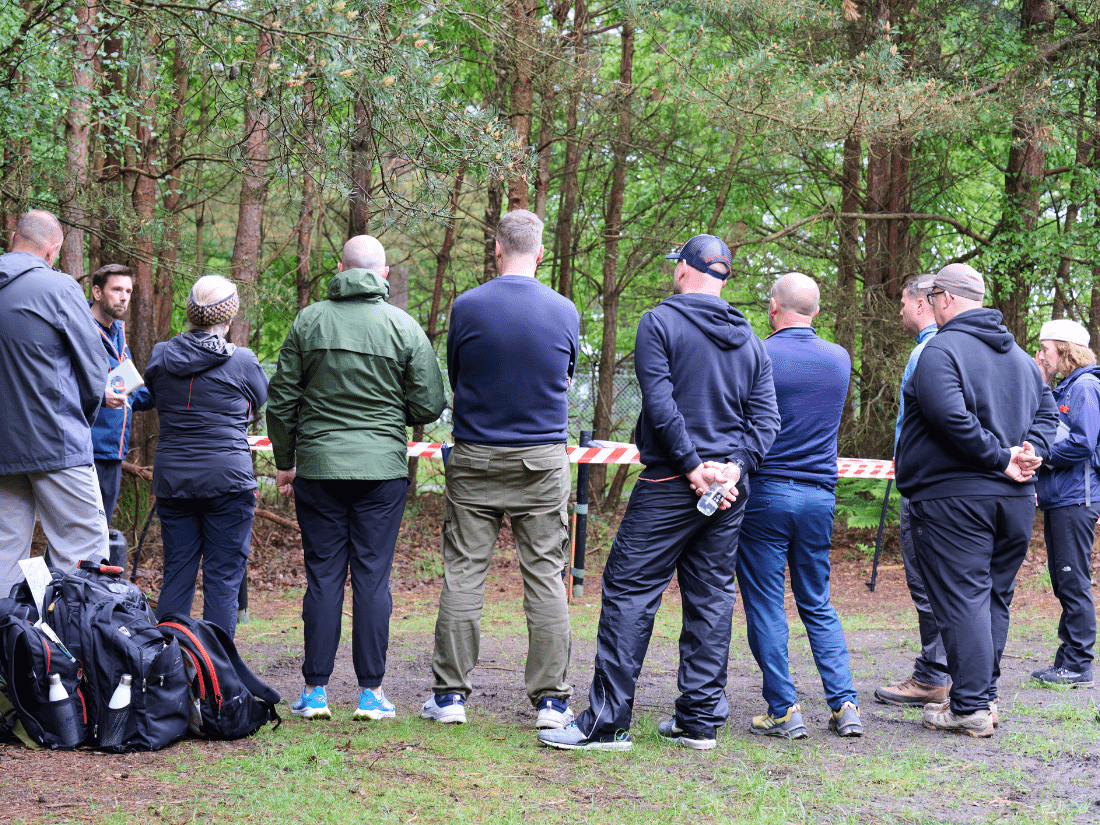
Most leadership development programmes teach people what to think. Leadership simulation exercises put them in conditions where they have to think, decide and act. Under...
VIEW ARTICLE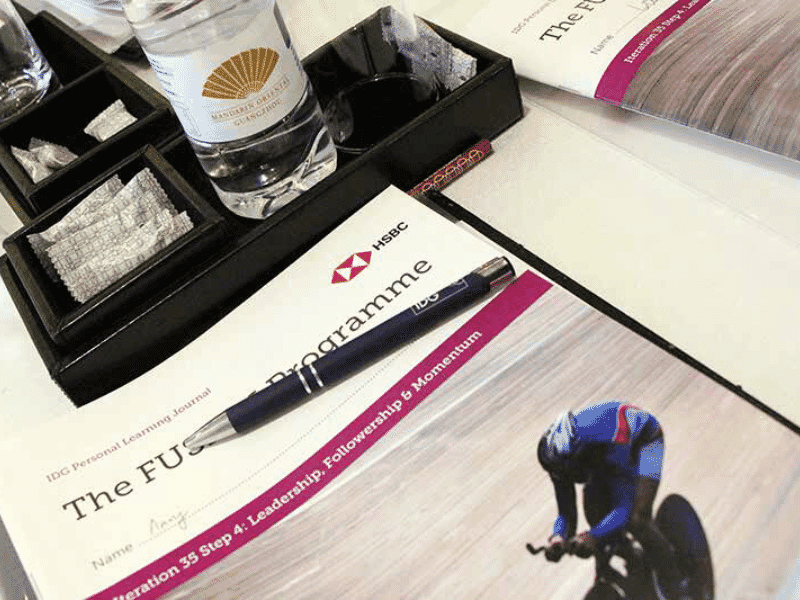
What does structured leadership development actually return? After 19 years of delivering FUSION, a year-long programme for HSBC, we have a considered answer. Drawn from...
VIEW ARTICLE
AI is rapidly becoming embedded in everyday work. The real challenge for organizations is no longer technology adoption, but how leaders exercise judgement and governance...
VIEW ARTICLE