A Coach Approach to Leadership


In this series: Coaching for Sustainable Change
- Coaching for Sustainable Change: Masterclass Summary & Recording
- Part 1: A Coach Approach to Leadership >
- Part 2: Resourcing Change with PIES >
- Part 3: Psychological Safety and Sustainable Change >
- Part 4: Cognitive Entrenchment and Fixed Thinking >
- Part 5: my360plus and Sustainable Development >
- Part 6: Four Rules for Sustainable Change >
How leaders create the conditions for meaningful and sustainable change
Leadership today is less about having the answers and more about creating the conditions where others can think well, act with confidence and grow through change. This is where a coach approach becomes a powerful and practical way of leading.
During our Coaching for Sustainable Change masterclass, many leaders shared that they felt overstretched and stuck in problem solving mode. A coach approach offers a different route. It shifts the role of the leader from fixer to facilitator, from expert to enabler, and from directive to developmental.
This article explores what a coach approach looks like in practice and why it forms the foundation for any sustainable change.
Why a coach approach matters in times of change
Awareness alone rarely leads to lasting change. Leaders influence whether that awareness becomes action or fades quietly into the background. When leaders approach their teams like coaches, several things happen:
- People feel trusted.
- They step into ownership more quickly.
- They think for themselves rather than waiting for direction.
- They experience change as something done with them, not to them.
This mindset shift is often the difference between short-term compliance and genuine, sustained behaviour change.
The five principles of a coach approach
During the masterclass, Lesley introduced five core principles that underpin coaching. Each one is deeply relevant for leaders who want to support sustainable change.
1. Trust the person in front of you
At the heart of coaching is the belief that the other person already has ideas, insight and potential solutions within them. Leaders often move straight into advice or problem solving, especially when pressure is high. A coach approach pauses that instinct.
Trust looks like:
- Asking before advising
- Supporting thinking rather than offering quick answers
- Believing your team can reach their own conclusions
It is remarkable what people produce when they feel trusted to think.
2. Accept, blend and create
Leaders are usually several steps ahead in any change journey. They have been thinking about it, preparing for it and refining the idea long before it reaches their teams.
Accept, blend and create is the practice of meeting people where they are, not where you are.
It asks leaders to:
- Notice how their team is feeling
- Slow down long enough to understand their starting point
- Create the next step forward together
This is where commitment begins, because people see themselves in the process.
3. Presence: the overlooked leadership skill
You cannot support meaningful change from the side of your desk. Presence is about quality attention and intentional conversations.
In practice this means:
- Putting distractions aside
- Listening without planning your response
- Staying curious instead of jumping ahead
- Helping others feel seen rather than managed
Presence is simple, human and incredibly powerful. It is also rare. When leaders model it, teams rise to it.
4. Partnership over hierarchy
In coaching, the relationship is a partnership. There is no hierarchy in the conversation. Both people contribute. Both bring insight. Both hold responsibility.
Leaders who adopt a coaching mindset hold conversations in a similar way. Instead of approaching discussions with a top-down mindset, they create an equal space where ideas can surface and thinking can unfold.
This does not remove accountability or authority. It simply creates a more open, collaborative space where people feel confident to speak honestly.
5. Creating possibility
Change can feel overwhelming. When uncertainty rises, possibility shrinks. People default to caution, self-protection and habit.
A coach approach helps people reconnect with possibility by:
• Asking generative questions
• Encouraging curiosity
• Highlighting choice, not constraint
• Helping people see more than one route forward
Possibility is often the spark that helps people re-engage with change in a constructive way.
A coach approach is not ‘soft’ leadership
One of the common misconceptions is that a coach approach removes challenge or dilutes expectations. The opposite is true.
When people feel trusted, included and able to contribute, leaders can introduce challenge more effectively and with far more safety. Teams take more ownership. Conversations become more thoughtful. Performance strengthens because people are not operating from fear or uncertainty.
A coach approach creates an environment where both compassion and accountability can thrive side by side.
How to begin using a coach approach this week
You do not need to overhaul your leadership style to make this shift. Small, consistent adjustments make the biggest difference.
Here are three places to start:
Ask one more question before giving your view.
It signals trust and helps others clarify their thinking.
Give someone your full attention for five minutes.
This single act of presence often unlocks insight.
Invite your team into the process instead of presenting a finished plan.
Co-creation builds ownership and commitment.
Building towards sustainable change
A coach approach is not a leadership tactic. It is a mindset and a way of being with others. When leaders adopt it consistently, teams feel supported, energised and capable. That sense of capability is what allows change to take root.
In the next article of this series we look at resourcing change with the PIES model, including a practical reset exercise leaders can use immediately.
If you would like support developing a coaching approach in your team or organisation, we would love to talk.
You may also like...
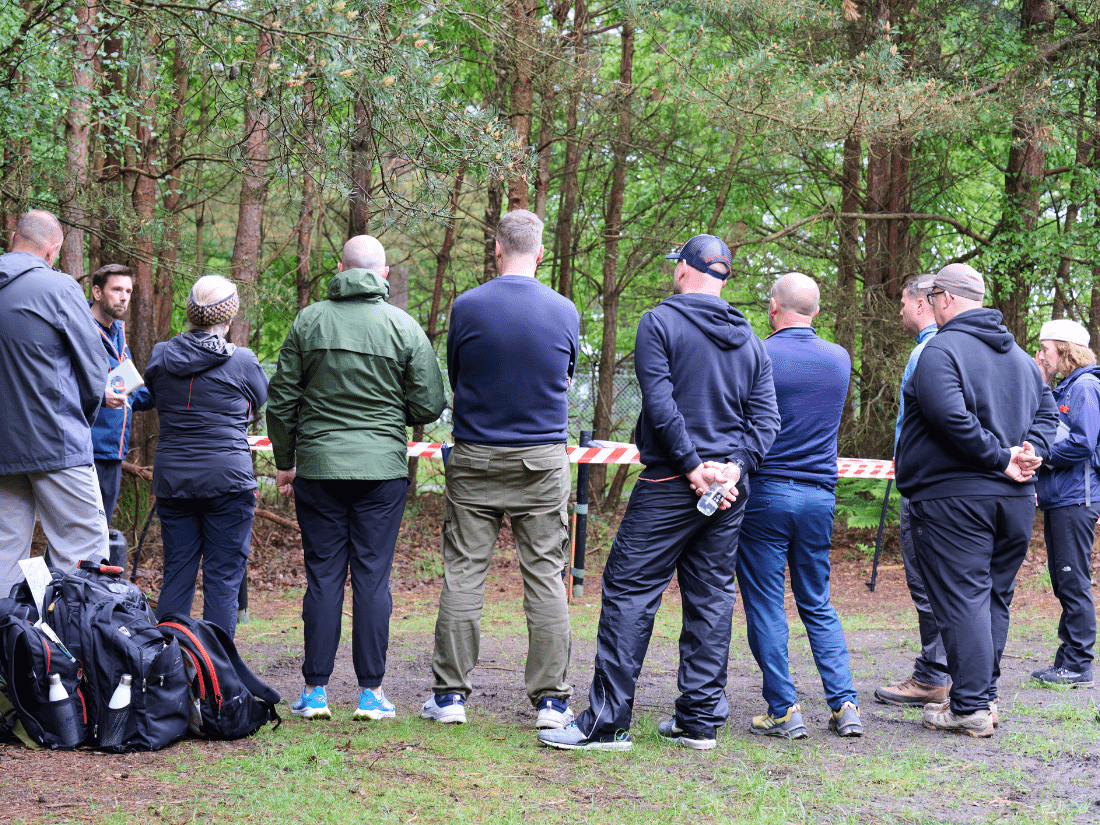
Most leadership development programmes teach people what to think. Leadership simulation exercises put them in conditions where they have to think, decide and act. Under...
VIEW ARTICLE
What does structured leadership development actually return? After 19 years of delivering FUSION, a year-long programme for HSBC, we have a considered answer. Drawn from...
VIEW ARTICLE
AI is rapidly becoming embedded in everyday work. The real challenge for organizations is no longer technology adoption, but how leaders exercise judgement and governance...
VIEW ARTICLE