Resourcing Change with PIES

In this series: Coaching for Sustainable Change
- Coaching for Sustainable Change: Masterclass Summary & Recording
- Part 1: A Coach Approach to Leadership >
- Part 2: Resourcing Change with PIES >
- Part 3: Psychological Safety and Sustainable Change >
- Part 4: Cognitive Entrenchment and Fixed Thinking >
- Part 5: my360plus and Sustainable Development >
- Part 6: Four Rules for Sustainable Change >
The Resource Reset exercise
During the masterclass, participants were invited to pause and reconnect with their own resources through a short reflective exercise. This simple reset sparked clarity and confidence for many.
Watch the full guided exercise from the masterclass:
Take a moment to follow this guided Resource Reset exercise led by Lesley. It helps you reconnect with the physical, intellectual, emotional and social resources already available to you.
Step 1: Physical
What small action could I take today to optimise my energy or presence?
This might be moving a meeting, resetting your workspace or taking two minutes to breathe.
Step 2: Intellectual
What capability, insight or past experience can I bring into my next decision?
This helps people reconnect with their expertise rather than questioning it.
Step 3: Emotional
What emotional state would serve me best right now and what helps me get there?
This shifts the focus from reacting to choosing.
Step 4: Social
Who could I connect with today to help me move a goal forward?
Most people already have more support available than they realise.
Final step
Which single action from the answers above would have the greatest impact if I committed to it today?
This closing question brings focus and momentum. It is also the beginning of sustainable change.
Why PIES works for leaders
Leaders often feel they must carry change. PIES reminds them that change is shared. It encourages a shift from pressure to perspective and from scarcity to resourcefulness.
When teams use PIES regularly, they begin to:
- Ask better questions
- Spot opportunities rather than obstacles
- Feel more capable and less overwhelmed
- Take consistent small steps rather than waiting for the perfect moment
This accumulation of small actions is ultimately what makes change sustainable.
Putting PIES into practice this week
You can introduce PIES in simple, practical ways:
- Start a meeting by asking one PIES question
- Use the Resource Reset exercise in a team session
- Encourage managers to use PIES during one to ones
- Add PIES reflections to a project checkpoint
- Use it as a weekly leadership habit
Small habits build strong capability.
Putting PIES into practice this week
Resourcefulness is not about having more. It is about seeing more in what is already there. PIES helps leaders create a more grounded, confident foundation for change by expanding awareness and anchoring action.
In the next article in this series, we explore psychological safety and why it is one of the strongest predictors of whether change will take root.
If you would like support helping your teams feel more resourced, capable and ready for change, we would love to talk.
Next in the series: Psychological Safety and Sustainable Change
In this series: Coaching for Sustainable Change
- Coaching for Sustainable Change: Masterclass Summary & Recording
- Part 1: A Coach Approach to Leadership >
- Part 2: Resourcing Change with PIES >
- Part 3: Psychological Safety and Sustainable Change >
- Part 4: Cognitive Entrenchment and Fixed Thinking >
- Part 5: my360plus and Sustainable Development >
- Part 6: Four Rules for Sustainable Change >
How leaders can build momentum through the resources they already have
One of the biggest misconceptions about change is that it requires a huge surge of energy, time or investment. In reality, most sustainable change begins with something far simpler. It starts with recognising the resources we already have and learning how to use them with intention.
During our recent Coaching for Sustainable Change masterclass, the PIES model was one of the tools that leaders responded to most strongly. It is simple, human and surprisingly powerful. Many participants said it immediately shifted their mindset from feeling stretched to feeling resourced.
This article explores how PIES works, why it matters, and how the Resource Reset exercise can help leaders and teams reconnect with what is already within reach.
Why resourcing matters in change
When people feel overwhelmed, they often underestimate their own capability. They focus on what is missing rather than what is available. This makes change feel heavier than it truly is.
Leaders can unintentionally reinforce this by focusing on problems, barriers or constraints. A resourcing mindset does the opposite. It helps teams:
- See what they already have
- Reclaim a sense of control
- Make progress through small, confident steps
- Strengthen belief in their ability to adapt
This is where PIES comes in.
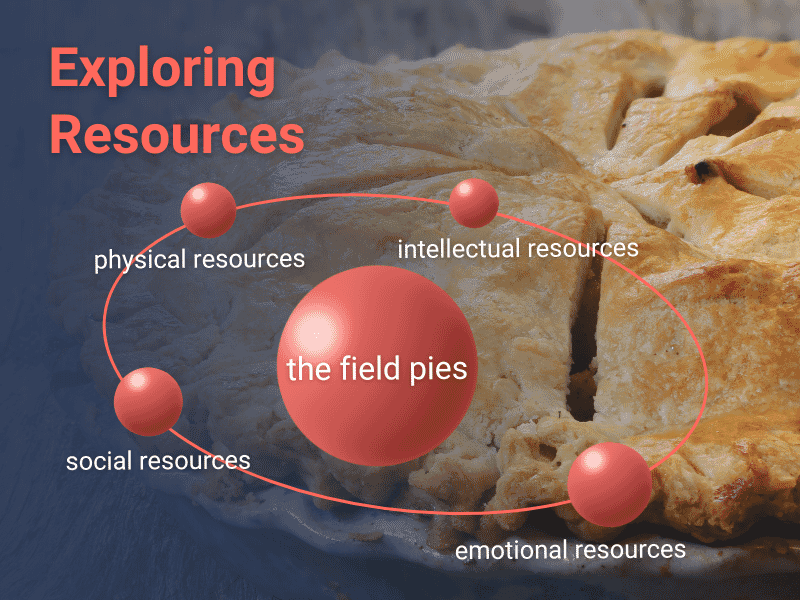
Introducing the PIES model
PIES is a practical framework that helps leaders and teams surface the four types of resources available to them. Each category plays a crucial role in navigating change.
1. Physical resources
These are the tangible assets that support progress. They might include:
- Time
- Budget
- Tools or equipment
- Processes
- People capacity
Leaders often assume they need more physical resources than they actually do. PIES helps teams identify what is already available or what can be redistributed.
2. Intellectual resources
This category covers knowledge, experience and expertise. Examples include:
- Technical skills
- Past experiences relevant to the change
- Industry insight
- Data and evidence
- Access to specialist advice
Leaders frequently overlook intellectual resources when they are feeling under pressure. Yet they are often the greatest accelerators of progress.
3. Emotional resources
Change does not fail because of knowledge gaps. It fails because of emotional fatigue, fear or uncertainty. Emotional resources include:
- Confidence
- Motivation
- Resilience
- Optimism
- Courage to take the next step
When leaders help people recognise their emotional strengths rather than their doubts, they unlock a sense of possibility.
4. Social resources
No change happens in isolation. Social resources include:
- Supportive peers
- Stakeholders who can champion the work
- Mentors or sounding boards
- Decision makers
- People who energise, challenge or encourage
Leaders with strong social resources rarely work alone. They work supported.
You may also like...
Most leadership development programmes teach people what to think. Leadership simulation exercises put them in conditions where they have to think, decide and act. Under...
VIEW ARTICLE
What does structured leadership development actually return? After 19 years of delivering FUSION, a year-long programme for HSBC, we have a considered answer. Drawn from...
VIEW ARTICLE
AI is rapidly becoming embedded in everyday work. The real challenge for organizations is no longer technology adoption, but how leaders exercise judgement and governance...
VIEW ARTICLE